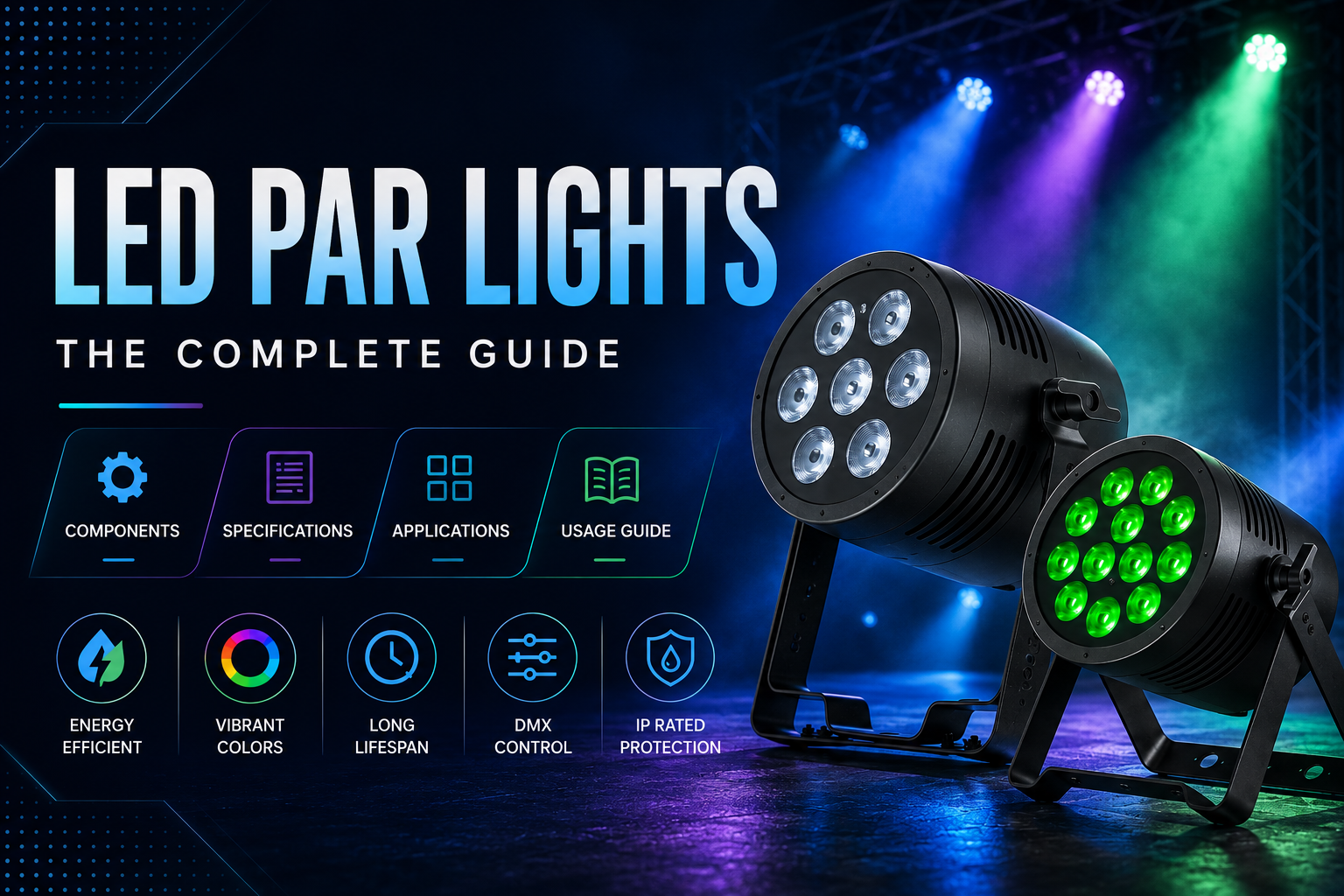
LED PAR lights are versatile fixtures widely used in cultural tourism projects, including scenic attractions, theme parks, immersive performances, landmark lighting, festivals, and outdoor night tours. Compared with traditional PAR cans, they offer lower power consumption, flexible color mixing, long service life, and precise DMX control. This guide explains their working principles, key specifications, and essential rules for selection, installation, control, and safe operation.
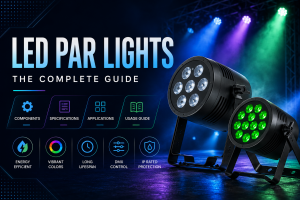
What Is an LED PAR Light?
An LED PAR light is a fixture that uses LED chips, instead of a halogen or incandescent lamp, as its light source, combined with a parabolic aluminized reflector (PAR) that shapes the light into a directional beam. It is used to produce colored or white illumination for stage, architectural, and outdoor lighting applications, and it is typically controlled through DMX.
Key Features
- LED chips produce the same brightness as halogen lamps while using significantly less electricity and generating less heat.
- Most fixtures combine red, green, blue, and white LED chips in one unit, producing a wide color range without gel filters.
- The fixture connects to a DMX console, allowing an operator to adjust color, brightness, and effects remotely.
- LED chips typically last tens of thousands of hours, far longer than halogen lamps.
How Do LED PAR Lights Work?
An LED PAR light works through three steps: power conversion, light generation, and beam shaping.
First, the driver converts incoming AC voltage into stable DC voltage. This stable current is necessary because LED chips require it to generate light through electroluminescence. Since most fixtures use separate red, green, and blue chip groups, adjusting the current to each group produces different colors; equal current across all three produces white light.
Once the chips generate light, the reflector or lens shapes it into a beam and determines its width. Throughout this process, a DMX interface controls the current sent to each chip group by receiving commands from a console, which allows the fixture to reproduce a set color and brightness on command.
LED PAR Light Components & Specifications
Choosing the right LED PAR light starts with understanding what is inside the fixture and what each specification on a datasheet actually means. This section breaks down the core components that make up a typical fixture, then walks through the specifications used to compare one model against another.
Key Components
An LED PAR light is built from seven core components, each of which performs one function in generating, controlling, or directing light.
- LED chips:generate the light through electroluminescence and determine the fixture’s color output and maximum brightness.
- Driver/power supply: converts incoming AC voltage into stable DC voltage and regulates the current sent to the LED chips.
- Reflector or lens: shapes the light emitted by the chips into a directional beam and sets the beam angle.
- Housing: encloses the internal components and protects them from dust, moisture, and physical impact.
- Heat sink:draws heat away from the LED chips and driver, since excess heat reduces chip lifespan and light output.
- Mounting bracket/yoke: attaches the fixture to a truss, stand, or wall, and allows the operator to adjust its tilt angle.
- DMX control interface: receives commands from a DMX console and converts them into current adjustments at the LED chips.
Key Specifications
When comparing LED PAR lights, ten specifications determine whether a fixture fits a given project. Each one affects a different aspect of performance, from physical installation to light output to control capacity.
- W. (Net Weight): the weight of the fixture itself, which determines whether a mounting point or truss can safely support it.
- Dimensions: the fixture’s length, width, and height, which determine whether it fits the available installation space.
- Operating voltage: the AC voltage range the fixture accepts, which confirms compatibility with local power supply.
- LED source:the number, wattage, and color configuration of the LED chips inside the fixture, which sets the fixture’s color output and overall power draw.
- Dimming:the fixture’s brightness adjustment range, which determines how finely an operator can control brightness during a scene.
- Beam angle: the width of the light beam, measured in degrees, which determines how concentrated or spread out the illumination is.
- Max lumen: the maximum light output the fixture can produce, measured in lumens, which indicates whether the fixture is bright enough for a given venue size.
- Control protocol:the communication standard the fixture uses to receive commands, most commonly DMX512, which determines which consoles and control systems the fixture can integrate with.
- DMX channel:the number of DMX channels the fixture occupies, which determines how many parameters (color, brightness, strobe) a console can control independently.
- IP grade: the fixture’s Ingress Protection rating, which indicates resistance to dust and water and determines whether the fixture is suitable for outdoor or wet-location use
The table below applies these specifications to two Dasen Lighting products, the YX-039P-6C and YX-040P-6C, to make these numbers concrete rather than abstract.
| Specification | YX-039P-6C | YX-040P-6C |
| N.W. | 3.7 KG | 6.2 KG |
| Dimensions | 252×226×152 mm | 309×266×180 mm |
| Operating voltage | AC100–240V, 60/50Hz | AC100–240V, 60/50Hz |
| LED source | 7×20W RGBWA-UV | 12×20W RGBWA-UV |
| Beam angle | 15° (25°, 40° optional) | 15° (25°, 40° optional) |
| Max lumen | 2820 lm | 4320 lm |
| Control protocol | DMX512, RDM | DMX512, RDM |
| IP grade | IP65 | IP65 |
LED PAR Light Usage Guidelines: DMX Setup, Mounting & Safety
Choosing the right output and beam angle, setting up DMX, mounting safely, and matching IP ratings all affect whether a fixture performs as expected on site.
How to Choose the Right Light Output and Beam Angle
Start with light output: a larger venue or longer viewing distance needs higher lumen output, while a small or controlled dark space can work with less.
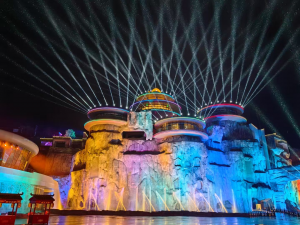
Beam angle then determines how that output is distributed. A narrow beam concentrates lumens onto a smaller area, suiting long-throw uses like facade lighting, while a wider beam spreads the same output over more surface area, suiting wide-coverage uses like stage washes.
If your project involves multiple throw distances, a fixture that supports more than one beam angle option covers different distances without switching to a different fixture family.
How to Set Up DMX Addressing and Channels
Give each fixture on a DMX line a unique start address, since this tells the console which channels belong to which fixture. From that address, the fixture occupies a fixed number of consecutive channels based on its channel count, so the next fixture on the line must start beyond that range to avoid overlap.
Channel count depends on control mode: a basic mode covers simple color control, while an extended mode adds strobe, macros, or fine dimming. Choose the right mode before addressing the fixture to avoid channel conflicts later.
Mounting and Rigging Safety
Before mounting, confirm the mounting point is rated to support the fixture’s net weight plus a safety margin, since wind and vibration add stress beyond its static weight.
For any fixture installed above head height, add a secondary safety cable independent of the primary bracket, so the fixture won’t fall even if the main mount fails.
IP Rating and Environmental Compliance
Check the IP (Ingress Protection) rating before deciding where to install a fixture, since it indicates resistance to dust and water. Different IP grades suit different installation environments:
| IP Rating | Protection Level | Typical Use |
| IP20 | Basic protection, no dust or water sealing | Indoor use only |
| IP54 | Dust-protected, splash-resistant | Semi-outdoor, covered areas |
| IP65 | Dust-tight, protected against low-pressure water jets | Outdoor use in most climates |
| IP66/IP67 | Dust-tight, protected against heavy jets or temporary immersion | Outdoor use in exposed or wet conditions |
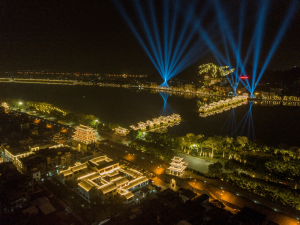
For outdoor cultural tourism projects, such as landmark lighting or night tours, look for at least an IP65 rating, such as the one carried by Dasen Lighting‘s YX-039P-6C and YX-040P-6C, to ensure reliable performance in outdoor conditions.
Common Confusions About LED PAR Lights
LED PAR lights are often confused with related fixture types and terms. This section clarifies three common points of confusion: how PAR lights differ from moving head lights, how they relate to wash lighting, and how to choose between RGBW and RGBWA+UV color mixing.
LED PAR Light vs. Moving Head Light: What’s the Difference?
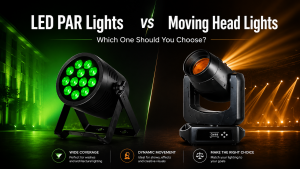
An LED PAR light has a fixed position and projects light in one direction, while a moving head light uses motorized pan and tilt to redirect its beam during a show. As a result, PAR lights work best for static color washes and backdrops, while moving head lights suit dynamic effects that need to track a performer or sweep across a space.
Is an LED PAR Light the Same as a Wash Light?
Not exactly. “Wash light” describes a function, a fixture that produces broad, even illumination, while “LED PAR light” describes a fixture type built around a parabolic reflector. Most LED PAR lights are used as wash lights, but wash lighting can also come from other fixture types, such as moving heads set to a wide beam angle.
RGBW vs. RGBWA+UV: Which One Do You Need?
RGBW fixtures combine red, green, blue, and white chips, covering most standard color-mixing needs. RGBWA+UV fixtures add amber for warmer and more saturated color blends, and UV for glow effects under blacklight-reactive materials. If a project only needs standard color washes, RGBW is sufficient; if it needs richer color depth or UV effects, RGBWA+UV is the better fit.
Find the Right Dasen Lighting LED PAR Light for Your Application
For cultural tourism and event lighting projects, Dasen Lighting’s YX-039P-6C and YX-040P-6C deliver the output, control flexibility, and outdoor durability these applications demand. Both models support multiple beam angle options, DMX512 and RDM control, and an IP65 rating for outdoor use.
YX-039P-6C (7×20W RGBWA-UV)
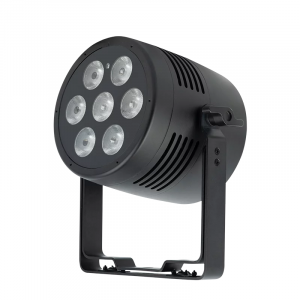
- Compact 3.7 KG build suited to smaller venues and tighter installation spaces
- Delivers 2820 lm, enough output for indoor stages and mid-size festival setups
YX-040P-6C (12×20W RGBWA-UV)
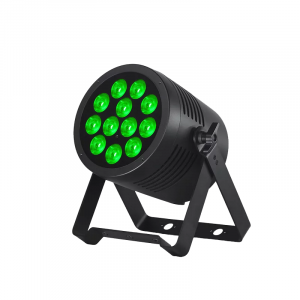
- Delivers 4320 lm, well suited to facades, landmarks, and longer throw distances
- Higher power draw supports larger venues and open-air installations
Together, these two models give project teams a reliable, well-rounded option at either end of the output range, without sacrificing the color mixing, control precision, or outdoor durability that cultural tourism and event lighting projects require.
Ready to Light Up Your Next Project?
LED PAR lights combine flexible color mixing, precise DMX control, and long service life, making them a practical choice for cultural tourism, architectural, and event lighting projects. Understanding their components, specifications, and setup requirements helps ensure the right fixture performs reliably in the field.
For projects that need durable, high-output color mixing fixtures, Dasen Lighting’s YX-039P-6C and YX-040P-6C are strong options. Get in touch with our team today to find the right fixture for your project and bring your vision to light.