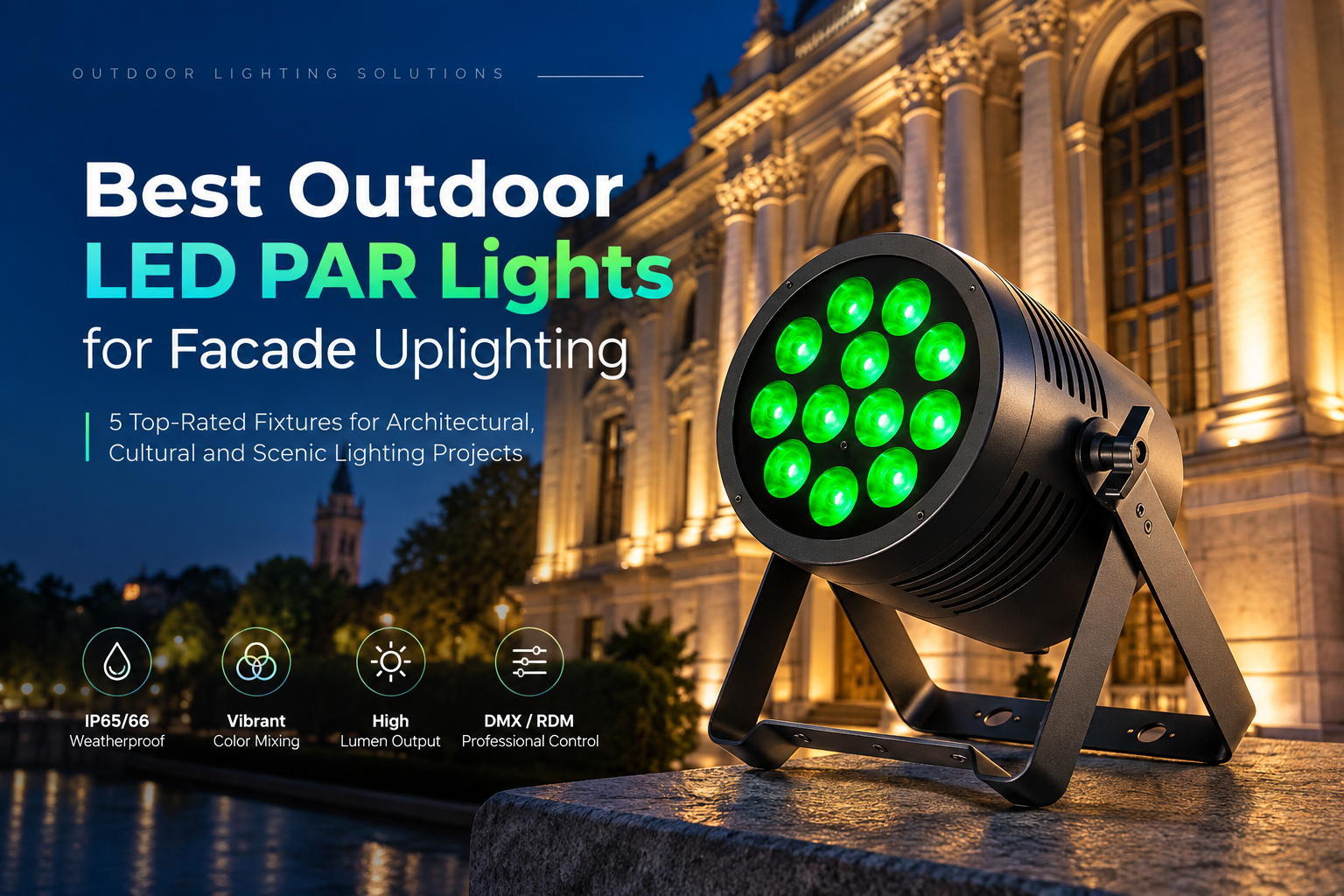
Choosing the wrong outdoor PAR light can mean fogged lenses, faded color, or a fixture that fails after one bad storm. This guide compares five IP-rated LED PAR lights designed specifically for cultural tourism destinations, heritage facade uplighting, and outdoor scenic projects. By evaluating IP ratings, power output, color mixing, and control options, you can match the right fixture to your project instead of guessing from a spec sheet.
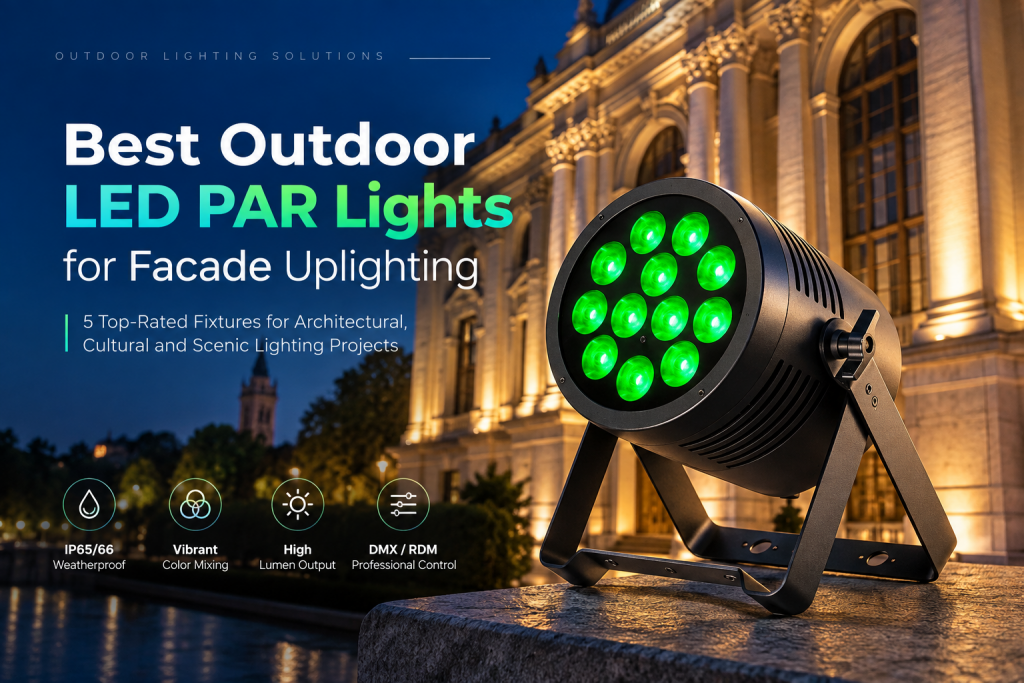
Our Top Pick: Dasen Lighting YX-040P-6C
The Dasen Lighting YX-040P-6C takes the top spot — a 240W powerhouse pumping out 4,320 lumens through a 12×20W RGBWA-UV 6-in-1 LED engine with a dedicated UV channel for glow and blacklight effects.
It’s fully IP65-sealed and rated to perform from -20°C to +45°C, so it doesn’t flinch at rain, dust, or extreme heat. DMX512 and RDM control drop it straight into any professional rig, and at just 6.2kg with a compact 309×266×180mm footprint, it’s as easy to mount on a facade as it is to load into a touring case.
Top 5 Outdoor LED PAR Lights for Facade Uplighting
Best for High-End Architectural Installs: Martin ELP PAR IP
Best for Touring + Fixed Installation: Clay Paky Mini-B ParLED Aqua
Best for Extreme Weather Protection: ETC Desire D40XT
Best for Zoom Flexibility: Vari-Lite SL PunchLite 220
Comparison of the Top 5 Outdoor LED PAR Lights
Evaluating multiple lighting fixtures requires a direct, side-by-side comparison of their core specifications. The table below outlines the critical hardware parameters, allowing you to objectively identify the exact technical baselines for each option before reviewing their specific applications.
| Product Model | IP Rating | Light Source & Color Mixing | Lumen Output | Beam Angle / Zoom Range | Control Protocol | Weight |
|---|---|---|---|---|---|---|
| Dasen Lighting YX-040P-6C | IP65 | 12×20W LED (RGBWA-UV 6-in-1) | 4,320 lumens | 15° (Fixed Lens) | DMX512, RDM | 6.2 kg |
| Martin ELP PAR IP | IP65 | 7×40W RGBW | 3,350 lumens | 4.4° – 33.3° | DMX, RDM | 9.1 kg |
| Clay Paky Mini-B Aqua | IP66 | 40W (x7) RGBW | 3,400 lumens | 4° – 53° | DMX, RDM, Art-Net, sACN | 7.4 kg |
| ETC Desire D40XT | IP66 | 40×2.5W LED (x7 Color System) | 2,593 lumens | 8° – 71° | DMX512, RDM | 6.4 kg |
| Vari-Lite SL PunchLite 220 | IP65 | 18×10W LED (RGBW / RGBA) | 3,500 lumens | 8° – 40° | DMX-512A, RDM | 10.0 kg |
As the data shows, all five fixtures share a strong baseline of IP65/IP66 weather resistance and RDM control. However, they diverge significantly in their optical strategies and physical footprints.
Some brands prioritize motorized zoom mechanisms, which increase fixture weight and often limit mixing to standard RGBW. Conversely, a lighter chassis paired with an expanded 6-in-1 color engine and higher lumen output is generally more practical for load-restricted heritage uplighting.
The following section breaks down the specific features, trade-offs, and ideal applications for each model.
A Closer Look at Each Outdoor LED PAR Light
#1 Best Overall: Dasen Lighting YX-040P-6C
The Dasen Lighting YX-040P-6C is a 240W outdoor-rated LED PAR light built for facade uplighting, architectural installations, and outdoor events. It pairs a 12×20W RGBWA-UV LED engine with an IP65-rated housing, making it a practical choice for projects that need both strong color output and reliable weather protection.
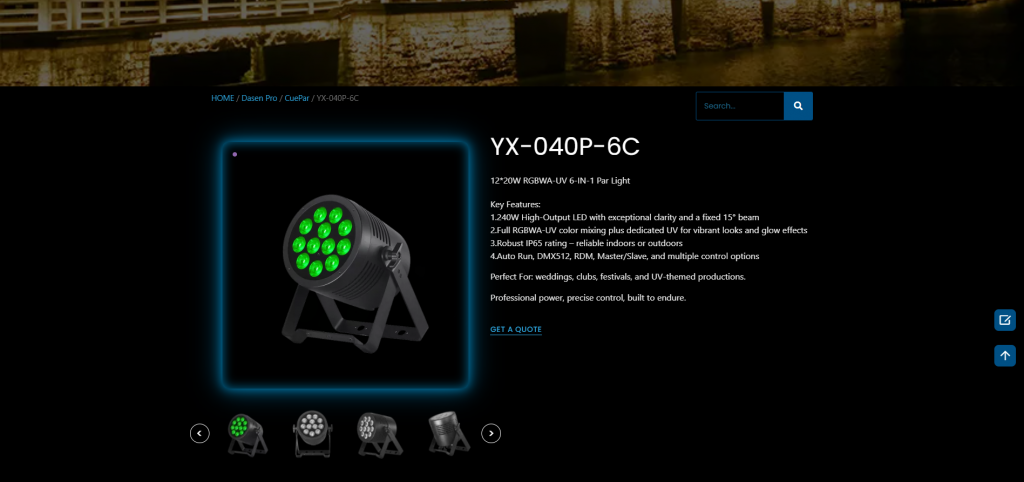
Key Features: Offers multiple control modes — DMX512, RDM, Auto Run, and Master/Slave — along with an optional 25°/40° beam angle lens beyond the standard 15°, giving flexibility across different control setups and throw distances.
Pros
- High-output 240W engine with 4,320 lumens
- Dedicated UV channel adds glow and blacklight-style effects alongside standard RGBWA mixing
- IP65 housing rated across a wide -20°C to +45°C range
- DMX512/RDM control integrates easily with existing rigs
- Compact 6.2kg, easy to mount and transport
Cons: Fixed 15° beam angle (25°/40° lens options available) offers less flexibility than motorized zoom fixtures.
Use Case: Well suited for heritage facade uplighting, structural accent lighting, and outdoor landscape installations where a durable, weather-resistant, and high-output PAR light is needed.
#2 Best for High-End Architectural Installs: Martin ELP PAR IP
The Martin ELP PAR IP is a robust, IP65-rated static LED wash fixture designed to deliver high-intensity output and full-gamut color calibration.
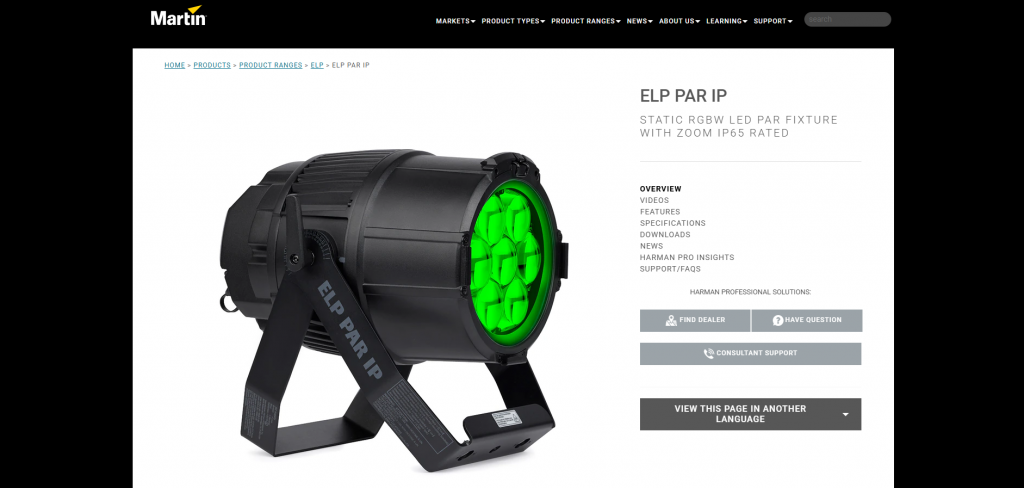
Key Features: It utilizes a 7×40W RGBW engine and a 4.4° to 33.3° motorized zoom, alongside a dedicated Color Temperature Control channel (1,800K–12,850K).
Pros: It delivers exceptional color fidelity and high center intensity (329,058 cd) for complex lighting scenes.
Cons: Weighing 9.1 kg with a premium cost, it challenges weight-restricted historical structures and tighter project budgets.
Best Use Case: Ideal for high-budget monumental facades and modern architectural landmarks requiring precision color calibration, provided the mounting surface can support its heavier frame.
#3 Best for Touring & Fixed Installation: Clay Paky Mini-B ParLED Aqua
The Clay Paky Mini-B ParLED Aqua is a compact, multi-protocol LED wash luminaire engineered with an advanced IP66 rating for extreme weather endurance.
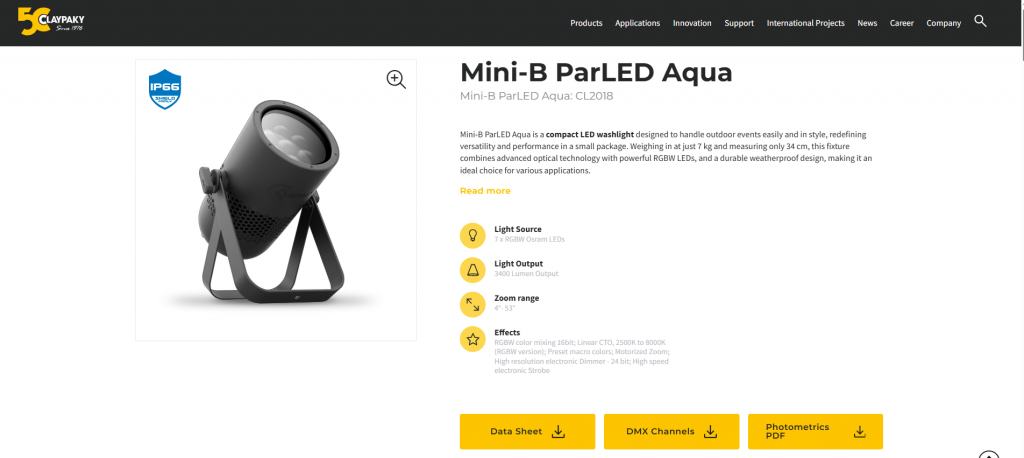
Key Features: Powered by seven 40W RGBW LEDs, it offers a 4° to 53° motorized zoom and specialized acoustic presets like a 35.3 dBA Theatre mode.
Pros: It provides superior water protection for aquatic attractions, while its 7.4 kg chassis enables rapid rigging in hidden scenic alcoves.
Cons: The smaller 160 mm front lens restricts optical spread, requiring more units to saturate massive historic walls.
Best Use Case: Excellent for waterside architectural features, riverside heritage walls, and high-humidity cultural attractions requiring extreme water resistance.
#4 Best for Extreme Weather Protection: ETC Desire D40XT
The ETC Desire D40XT is a fully sealed, IP66-rated wash luminaire constructed with a heavy-duty die-cast housing and a fan-free cooling system.
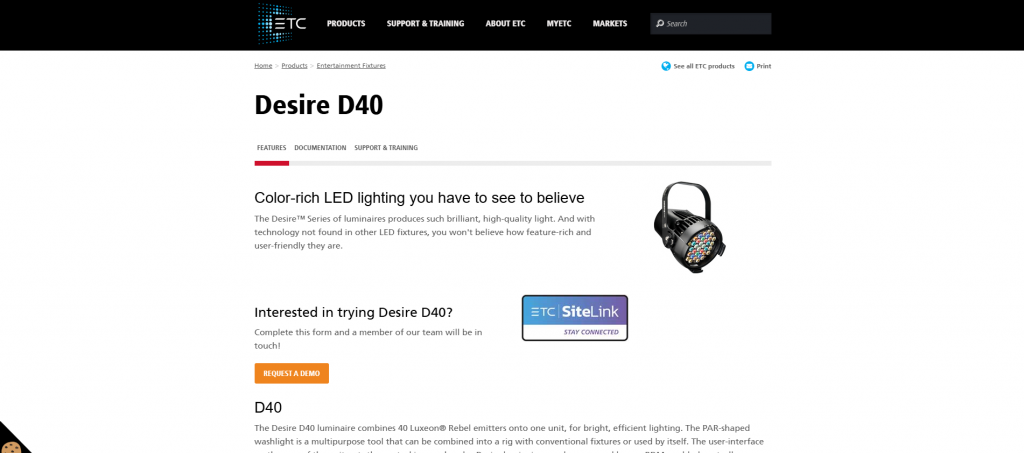
Key Features: It houses forty 2.5W emitters using ETC’s x7 Color System, relying entirely on interchangeable secondary lenses for 8° to 71° beam distributions.
Pros: The 7-color recipe yields an unmatched CRI (up to 93) for natural stone rendering, while the fanless design ensures absolute silence.
Cons: Relying on physical lenses prevents remote beam sizing, and its 2,593-lumen output is notably lower than high-wattage competitors.
Best Use Case: Optimal for acoustically sensitive heritage sites, museums, and close-range architectural facade uplighting where absolute silent operation is prioritized over raw intensity.
#5 Best for Zoom Flexibility: Vari-Lite SL PunchLite 220
The Vari-Lite SL PunchLite 220 is a heavy-duty, IP65-rated LED wash luminaire built with passive cooling and a distinctive honeycomb front lens.
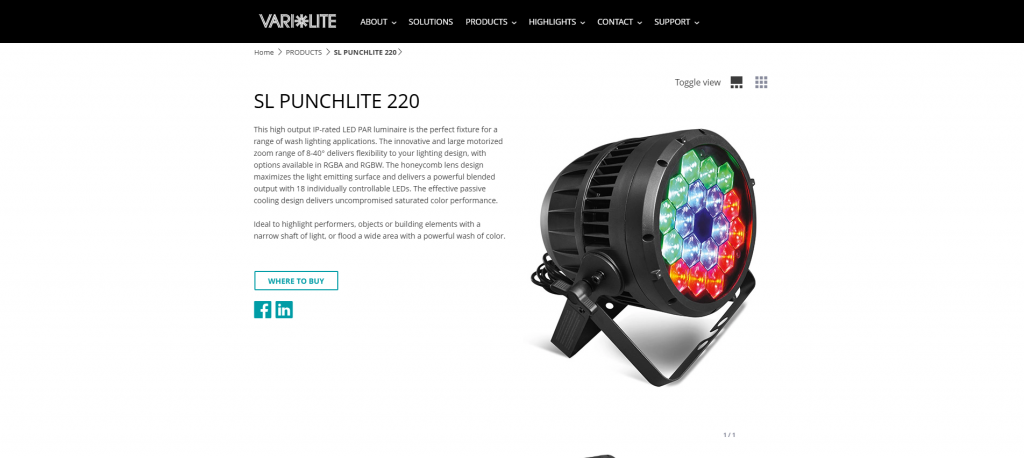
Key Features: It utilizes eighteen 10W LEDs to deliver 3,500 lumens, paired with an 8° to 40° motorized zoom range.
Pros: The honeycomb optics produce an exceptionally uniform beam with zero visible color separation, ensuring smooth gradient wall washes.
Cons: Weighing 10.0 kg with a bulky footprint, it is cumbersome to handle and difficult to conceal within minimalist landscape architectures.
Best Use Case: Suited for expansive theme park facades, fortress walls, and large historical monuments needing broad color washes.
How to Choose an Outdoor LED PAR Light
Selecting the right LED PAR fixture requires matching technical specifications to the physical and environmental demands of your specific site. Here is how to evaluate your options objectively:
Evaluate the IP Rating for Your Specific Environment
When choosing a fixture, first assess the local weather and placement. If the light will be exposed to general rain, snow, and dust, an IP65 rating provides reliable protection for year-round outdoor use.
However, if the installation is located directly next to musical fountains, waterfalls, or coastal areas with heavy water spray, selecting an upgraded IP66-rated fixture is necessary to prevent moisture ingress.
Calculate Required Lumen Output Based on Facade Size
Determine your required brightness by measuring the target facade’s height and checking the ambient light levels of the surrounding area. Lower-output luminaires are generally sufficient for small garden pavilions or close-range accent lighting.
Conversely, to illuminate large-scale city walls, temples, or multi-story structures, you should select fixtures with the highest available lumen output. This ensures the light reaches the top of the structure evenly, even in areas with competing streetlights.
Examine the Color Mixing Engine for Material Rendering
Look at the exact LED diode configuration on the datasheet. Standard RGBW (Red, Green, Blue, White) engines create saturated colors but often struggle to replicate natural warm tones.
If you are lighting historic brick, natural stone, or aged timber, choose a fixture that includes Amber emitters (such as an RGBWA system) to achieve authentic, warm color rendering. Additionally, look for added UV (Ultraviolet) capabilities if your project includes interactive night tours or modern art.
Factor in Fixture Weight and Rigging Constraints
Always check the physical weight of the fixture before purchasing, especially for heritage sites. Heavier fixtures increase structural stress on ancient eaves and require heavy-duty rigging equipment.
Selecting lightweight fixtures ensures safer installation on delicate architectural substrates. It also reduces the visual mounting footprint and significantly cuts down on installation labor.
Confirm Control Protocol Compatibility
Verify that the fixture supports standard DMX512 for reliable show programming. More importantly, check for RDM (Remote Device Management) compatibility.
RDM is critical for outdoor and architectural installations. It allows operators to troubleshoot, monitor fixture status, and change DMX addresses remotely, eliminating the need to physically access fixtures mounted on high roofs or sensitive ancient structures.
Final Verdict: Which Outdoor LED PAR Light Should You Choose?
After objectively comparing the official specifications, the Dasen Lighting YX-040P-6C stands out as the most practical investment for cultural tourism uplighting.
It combines the highest raw lumen output with a versatile RGBWA-UV 6-in-1 color system, ensuring flawless rendering of historic architecture and vibrant scenic effects.
Furthermore, its class-leading lightweight construction minimizes installation strain on delicate ancient structures. This makes the Dasen Lighting YX-040P-6C the definitive choice for operators requiring reliable, color-accurate outdoor performance.
Ready for your next project? Contact Dasen Lighting today for a custom quote or project consultation.
FAQ
Q: Which IP Rating Do I Need for Permanent Facade Installations?
A: For permanent outdoor installs with no cover, IP65 is generally the minimum to look for — it protects against dust and water jets from any direction. Dasen Lighting’s YX-040P-6C meets this standard and is also rated for a wide -20°C to +45°C operating range, which matters as much as the IP number for permanent facade work.
Q: What Information Should I Provide When Requesting a Quote?
A: Suppliers typically need your facade dimensions or throw distance, desired beam angle, control protocol (e.g., DMX512), and installation environment (coastal, high-heat, etc.). Sharing these details upfront helps manufacturers like Dasen Lighting recommend the right configuration, including beam angle options, for your project.
Q: Are These PAR Lights Suitable for Both Indoor and Outdoor Use?
A: Most IP65-rated PAR lights, including the YX-040P-6C, are built to perform reliably both indoors and outdoors without needing separate fixtures for each — a practical advantage for venues or projects that use the same lighting across multiple settings.