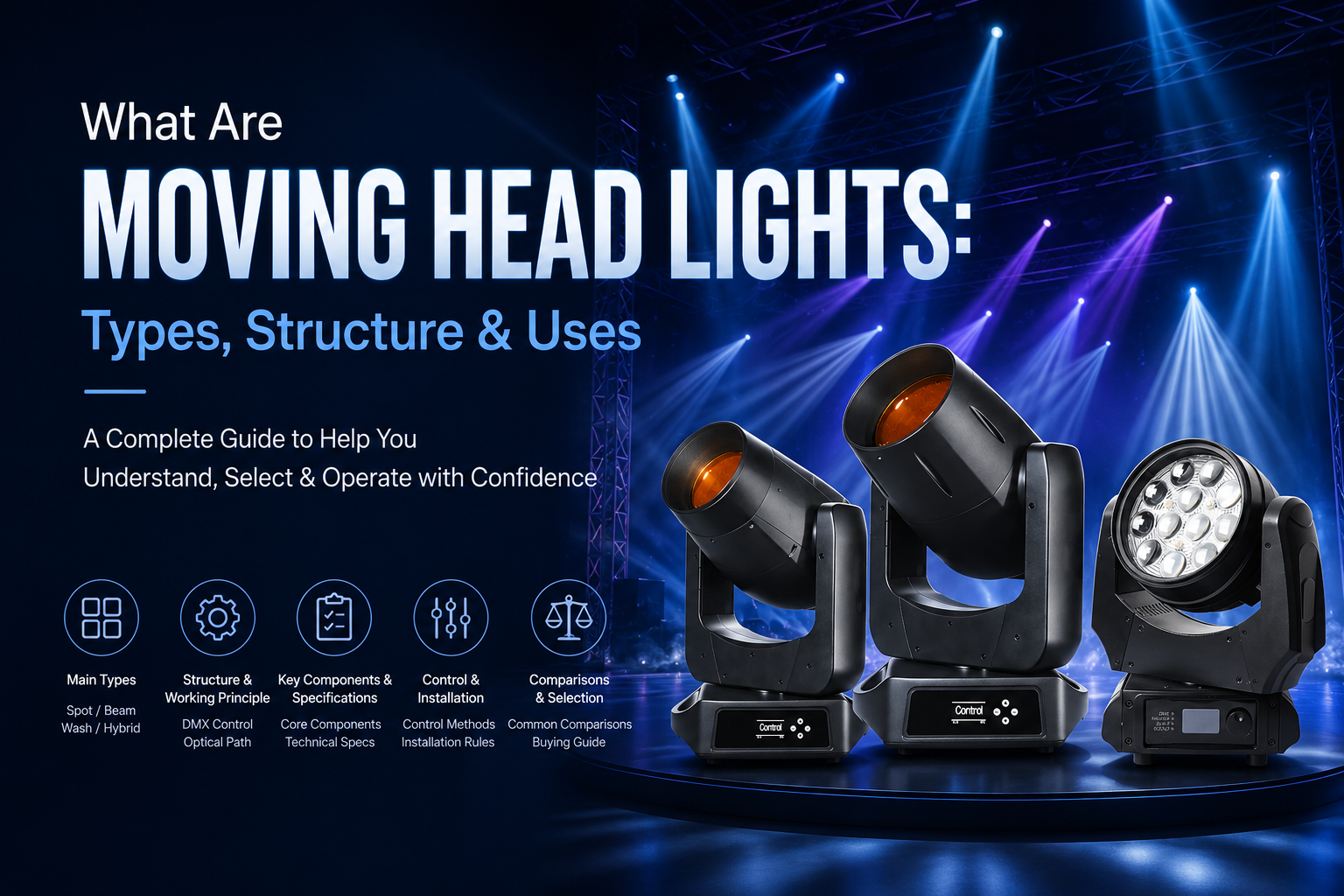
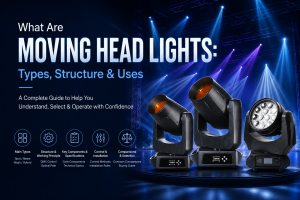
Moving head lights are versatile, intelligent lighting fixtures. With motorized pan and tilt movement, they create dynamic beams, colors, patterns, and effects across a venue. This guide introduces their main types, working principles, essential components, technical specifications, installation rules, control methods, and common comparisons, helping users better understand, select, and operate the right moving head light.
What Is a Moving Head Light?
A moving head light is a fixture whose head rotates on its own. This rotation is driven by a DMX control signal and includes two movements: pan (horizontal) and tilt (vertical).
Traditional fixed stage lights can only illuminate one fixed direction; changing the angle requires manual adjustment. Moving head lights are different. They use motors to rotate the fixture head, so the beam direction can change in real time during a show. This is the core distinction between moving head lights and fixed fixtures.
Main Types of Moving Head Lights
Moving head lights fall into four categories based on their optical function.
Spot Moving Head
Built with a gobo wheel and prism, this type projects sharp shapes and patterns. It works well for architectural facades, themed attractions, and scenic backdrop effects.
Beam Moving Head
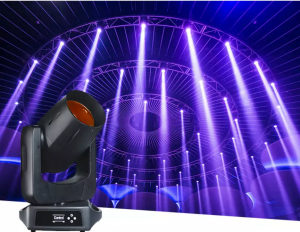
This type produces a tight, concentrated beam with long throw distance. It creates sharp light columns that cut through air and haze, common in large-scale shows, night tours, and outdoor landscape lighting.
Wash Moving Head
This type has a wide light coverage area and soft output. It is used for broad, even color washes that set the overall mood of a venue, building, or outdoor space.
Hybrid / All-in-One (Spot+Beam+Wash)
This type combines all three functions in one fixture through internal optical switching. It suits sites with limited installation space but varied lighting needs, such as theme parks, cultural landmarks, and mixed-use venues.
How Do Moving Head Lights Work?
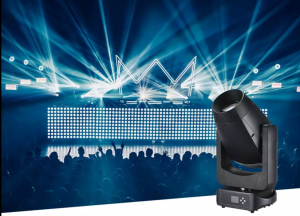
Moving head lights rely on two coordinated paths: one carries the command, the other produces the light. Together, they turn a control instruction into a visible effect.
The DMX Control Signal Path
A lighting console sends digital signals using the DMX512 protocol. The fixture decodes these signals internally and drives the corresponding motors and modules. Each function is assigned its own DMX channel.
The Optical Light Path
Once the fixture receives this instruction, light from the source passes through reflectors, lenses, color wheels, and gobo wheels before exiting through the lens as the final beam.
In short, the DMX path tells the fixture what to do, and the optical path turns that instruction into visible light. A complete lighting output depends on both working together.
What Are the Key Characteristics of a Moving Head Light?
Choosing the right moving head light means knowing what’s inside it and what its spec sheet actually tells you. The following sections cover both: the core components that shape performance, and the specifications used to compare one fixture against another.
Key Components
- Light source:LED, discharge lamp, or halogen. LED sources have a longer lifespan and lower heat output, making them the current mainstream choice.
- Lenses, reflectors, and a zoom module: Together, they control beam focus and spread, shaping how tight or wide the light appears.
- Color wheel and gobo wheel: The color wheel switches colors, while the gobo wheel projects fixed patterns.
- Prism: Splits a single beam into multiple beams, adding visual layers.
- Pan/tilt motor assembly: Drives the horizontal and vertical rotation of the fixture head. This is the core component that separates moving head lights from fixed fixtures.
- Iris: Controls the beam’s edge boundary, allowing precise adjustment of spot size.
- Control board and DMX interface:Receives and processes control signals, serving as the connection point between the fixture and the console.
- Cooling system:Uses fans or heat sinks to lower internal temperature, keeping the fixture stable during extended operation.
Key Specifications
- Wattage range:Indicates the fixture’s power draw and overall brightness output.
- Pan/tilt rotation range:Defines how far the fixture can rotate horizontally and vertically to scan a space.
- Beam angle / zoom range: Beam angle sets the width of the light spread, while zoom range determines how far that angle can be adjusted between narrow and wide.
- Number of DMX channels: Indicates how many features, such as color, gobos, prism, and framing, can be controlled independently.
- Weight and housing size:Affects installation method, transport cost, and load-bearing requirements at the mounting point.
- Color temperature / CRI: Color temperature indicates whether the light appears warm or cool, while CRI indicates how accurately it renders color.
Dasen Lighting offers several moving head light products, each targeting a different optical function and application scenario. Using the XY-012A, Imager H280, and Imager B200 as examples, the table below shows how these differences translate into real specifications.
| Specification | Imager B200 | Imager H280 | XY-012 |
| Type | Beam Moving Head | Spot Moving Head | Wash Moving Head |
| Light Source | 200W BEAM | 280W LED | 128W LED |
| Beam Angle | 1.9° | 3°–30° | 5°–60° |
| DMX Channels | 16/19CH | 23/26CH | 10CH / 16CH / 26CH |
| Net Weight | 22KG | 23.5KG | 6.9KG |
| Dimensions | 356×244×586mm | 365×245×659mm | 310×152×385mm |
| IP Rating | IP66 | IP66 | IP20 |
| Voltage | AC100–240V, 50–60Hz | AC100–240V, 50–60Hz | AC100–240V, 50–60Hz |
Each model plays a distinct role: the Imager B200 delivers a tight, high-intensity beam suited for aerial effects, the Imager H280 provides sharp gobo projection for detailed patterns, and the XY-012 offers broad, even coverage for color washes.
Moving Head Light Operation & Usage Guide
Buying the right fixture is only half the job. How it’s addressed, checked, and maintained determines whether it performs reliably show after show.
DMX Addressing and Channel Setup
Each fixture needs a unique DMX starting address before it can be controlled correctly. This address tells the console which block of channels belongs to that specific light.
Addressing errors are one of the most common setup mistakes. If two fixtures share overlapping addresses, they will respond to the same commands instead of moving independently, which makes the whole rig behave unpredictably.
To avoid this, the starting address of each fixture should account for how many channels the previous fixture uses. For example, if a fixture uses 16 channels and starts at address 1, the next fixture should start at address 17, not address 2.
Pre-Operation Safety Checks
Before powering on any fixture, a few checks are required, not optional.
First, confirm that the rigging point can support the fixture’s weight, including a safety margin. Second, inspect the power cable for cracks, exposed wire, or loose connectors. Third, make sure a safety cable is properly attached in addition to the main mount, so the fixture cannot fall if the primary rigging point fails.
Together, these checks form a routine that should happen before every show, regardless of how familiar the fixture or the venue may seem.
Routine Cleaning and Maintenance
Dust is the main threat to performance once a fixture is installed and running. Over time, it settles on the lens, which dims the output and softens the beam edge. It also collects around the cooling fan and vents, and as airflow drops, the internal temperature rises. That heat buildup is what shortens the lifespan of the LED source and the surrounding electronics.
For this reason, the lens should be wiped with a soft, dry cloth on a regular basis, and the fan intake should be kept clear of dust. A full inspection every few months catches worn parts before they lead to a failure, keeping the fixture performing at the level it was designed for.
Moving Head Lights: Common Confusions & Comparisons
A few distinctions in this space get mixed up often. Clearing them up makes it easier to choose the right fixture for the right job.
Moving Head Lights vs. Fixed Stage Lights
The core difference comes down to movement. A fixed stage light stays pointed in one direction once it’s mounted, while a moving head light rotates on motorized pan and tilt, letting a single fixture cover multiple positions during a show. This is why a rig built around moving heads generally needs fewer fixtures to achieve the same coverage.
Spot vs. Beam vs. Wash Moving Head Lights
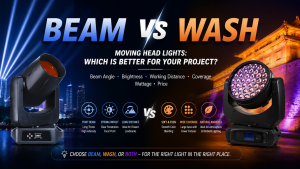
These three types are often confused because they all fall under “moving head,” but each serves a different visual purpose. A spot moving head light projects sharp gobo patterns for logos and textures. A beam moving head light produces a tight, high-intensity shaft of light visible in air rather than on a surface. And a wash moving head light trades sharpness for coverage, spreading soft, even color across a large area to set overall mood.
Because each moving head light type solves a different problem, most professional rigs combine two or three types rather than relying on just one.
LED vs. Discharge Lamp Moving Head Lights
The choice between these two light sources comes down to a trade-off between running cost and raw brightness. LED sources start instantly, run cooler, and typically last tens of thousands of hours, reducing maintenance and replacement costs. Discharge lamps often produce higher peak brightness but generate more heat and have a shorter lamp life. As LED technology has closed much of the brightness gap, it has become the default choice for most new fixtures.
Dasen Lighting Moving Head Light Solutions
For teams building a well-rounded lighting rig, Dasen Lighting offers three fixtures that each excel in a distinct role, together covering the core needs of most professional setups.
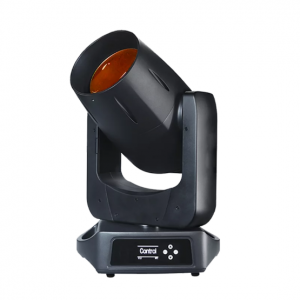
- Imager B200: This 200W beam fixture stands out for its razor-sharp 1.9-degree beam angle, delivering long-throw aerial effects that cut cleanly through haze. Its IP66 rating and 540-degree pan with 270-degree tilt make it a dependable choice for demanding outdoor productions.
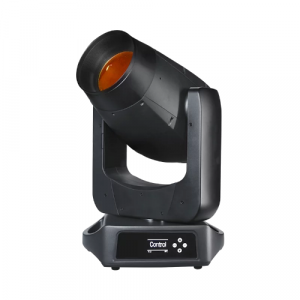
- Imager H280: With a 280W LED source and a 3 to 30-degree zoom range, this spot fixture offers exceptional versatility for pattern work. Its 13+1 fixed and 9+1 rotating gobos give designers a rich library of effects, backed by the same IP66 protection for reliable outdoor performance.
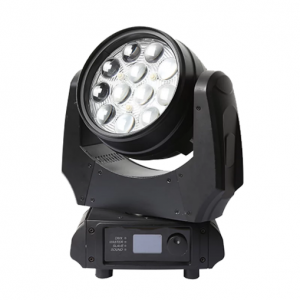
- XY-012A: This 128W wash fixture is built for smooth, even coverage, with a 12×10W RGBW array and a wide 5 to 60-degree zoom range that adapts easily from tight highlights to full-stage washes. At just 6.9KG, it’s easy to install and reposition, even in space-constrained venues.
From aerial beams to detailed patterns to soft color washes, each fixture is built to handle its part of the show reliably.
Choosing the Right Fit
Choosing the right moving head light comes down to matching type, specifications, and use case to the venue at hand. Dasen Lighting’s Imager B200, Imager H280, and XY-012A cover the full range of beam, spot, and wash needs, backed by reliable engineering and industry-standard protection ratings. For guidance on selecting the right fixture for your project, contact Dasen Lighting today.