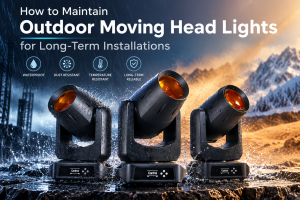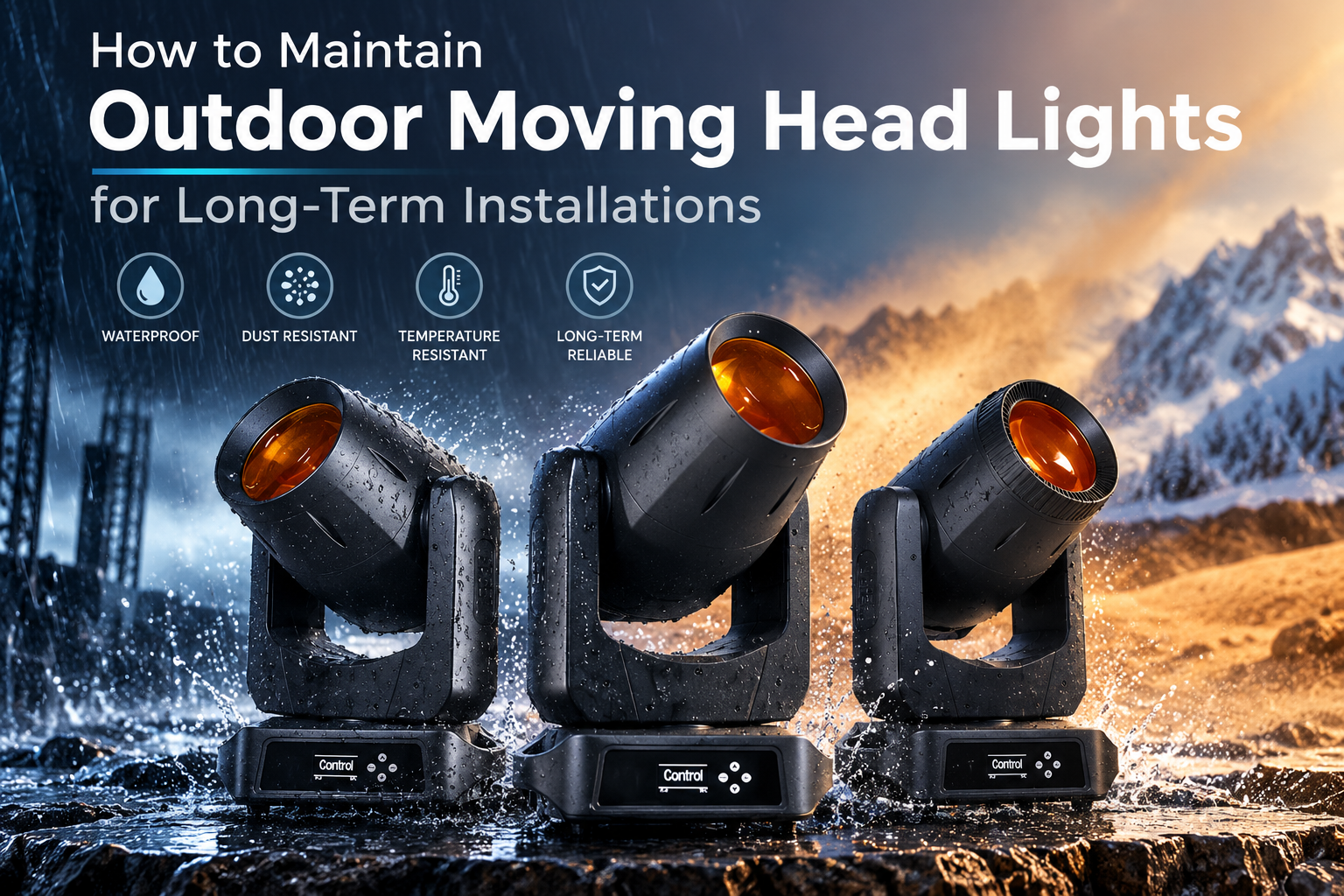
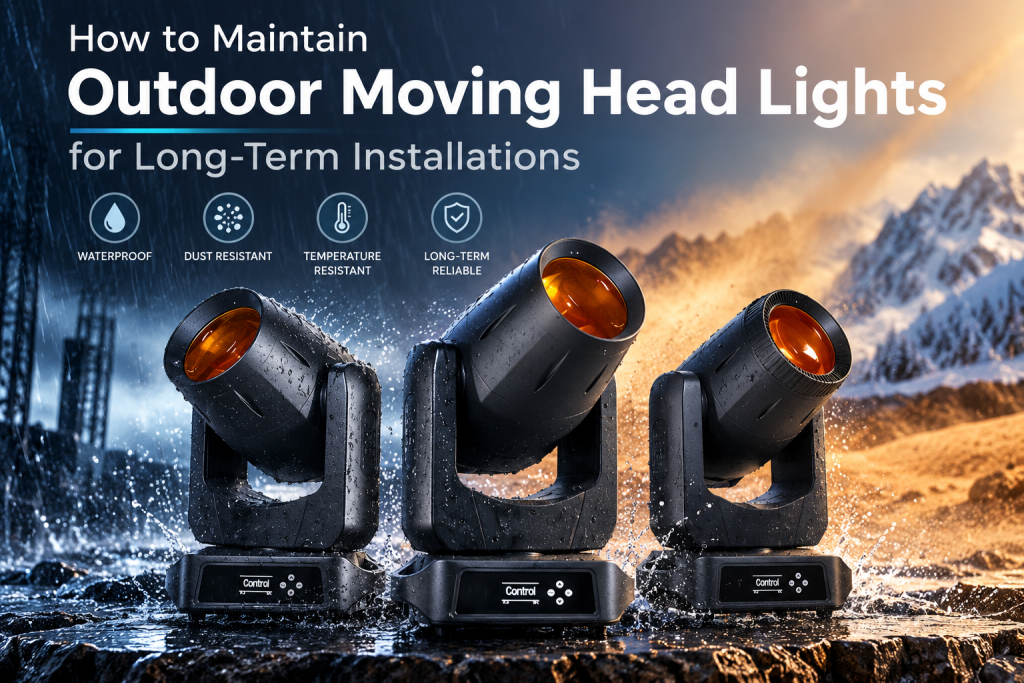
Outdoor moving head lights are often exposed to rain, dust, humidity, temperature changes, and UV radiation for extended periods. Without proper maintenance, these conditions can affect cooling performance, movement accuracy, waterproofing, and overall fixture lifespan. Regular cleaning, inspection, and preventive maintenance are therefore essential for long-term outdoor installations. This guide explains the key maintenance steps and what to consider when choosing a fixture for reliable outdoor use.
Why Is Regular Maintenance Important for Long-Term Outdoor Installations?
An outdoor rating covers specified dust and water exposure; seals, connectors, fans, and moving parts still age during permanent installation. Regular maintenance controls this gradual wear before it affects fixture performance.
Rain, dust, ultraviolet radiation, humidity above 60%, and seasonal conditions ranging from −40°C to 46°C place continuing stress on the fixture. Condensation may also form when an internal surface reaches the dew point. Common effects include:
- Reduced light output: Dust, sand, and baked-on fog or haze fluid residue on optical components can reduce light output by 20% to 30%.
- Lower cooling efficiency: Dust on fans, heat sinks, and exhaust vents can reduce heat dissipation by up to 40%, increasing thermal stress on LEDs and electronic components.
- Movement errors: Worn belts, bearings, and drive components can cause vibration, motor jams, and pan/tilt positioning errors.
- Moisture-related faults: Aging seals, cable glands, and pressure-balance valves can allow moisture to enter, leading to lens fogging, corrosion, or electrical faults.
Regular cleaning and inspection maintain optical clarity, airflow, movement accuracy, and ingress protection. Compared with a run-to-failure approach, preventive maintenance can reduce total operating costs by 25% to 35% while limiting unplanned downtime and emergency high-access repairs.
How to Clean and Inspect Outdoor Moving Head Lights Properly
To prevent these issues from further affecting fixture performance, routine cleaning and inspection should cover the housing, lens, cooling components, seals, and connectors, while also checking for moisture inside the fixture. Disconnect the power and allow the fixture to cool before starting.
Clean the Housing, Lens, Fans, and Vents
Follow a clear sequence: remove loose particles, wipe the surfaces, and then clean the cooling components. Start with a soft brush to remove dust and sand that could scratch the surface, then wipe the housing with a damp, lint-free cloth. For the lens, apply the optical cleaner to the cloth and wipe gently. After cleaning the housing and lens, use a soft brush or low-suction vacuum on the fans, vents, and heat sinks, holding the fan blades in place to prevent uncontrolled spinning.
Inspect Seals, Waterproof Connectors, and Cables
First, check gaskets, O-rings, cable glands, protective caps, and housing joints for cracks, flattening, or displacement. Replace damaged parts with components of the same specification and ensure they are fitted correctly. Then confirm that power and DMX connectors are clean, dry, and locked, and inspect cable jackets and pins for wear, damage, or corrosion.
Check for Water Ingress, Condensation, and Corrosion
Fogging, droplets, water marks, rust, white deposits, and green corrosion are common signs of internal moisture. When these signs appear, keep the fixture powered off and trace the water back to a seal, housing joint, cable gland, or connector. Once the entry point is identified, dry the affected area and replace damaged seals or contacts. Power can be restored after the compartment is completely dry and sealed.
Which Core Systems Require Attention During Long-Term Use?
Long-term wear often first appears as movement errors, reduced airflow, or unstable optical and control responses. The table below summarizes the components to monitor and the warning signs for each core system.
| Core system | Main components | Long-term effect | Warning signs |
| Pan and tilt movement | Motors, belts, gears, and sensors | Repeated movement causes wear and resistance. | Noise, vibration, slow movement, or positioning errors |
| Cooling and fan system | Fans, vents, filters, and heat sinks | Dust and bearing wear reduce airflow. | Fan noise, weak airflow, dimming, or temperature warnings |
| Optical effects and DMX control | Focus, zoom, color, gobo, prism, and DMX connections | Optical positioning may drift, while poor connections interrupt control data. | Sticking effects, delayed response, wrong positions, or channel errors |
How Should Maintenance Be Adjusted for Different Outdoor Environments?
Humid and Rainy Environments
Inspect seals, O-rings, cable glands, and housing joints every 3 to 6 months. After heavy rain, check for moisture and keep pressure-equalization vents clear. Inspect serviceable air filters weekly to monthly, and reinstall washable filters after complete drying.
Coastal and Salt-Spray Environments
With the power disconnected, remove salt from the housing, lens, and cable-entry areas every 3 months using fresh water or an approved neutral cleaner. Inspect fasteners, brackets, safety cables, connector contacts, and coating damage, then treat scratches or early corrosion with compatible products.
Hot, Dusty, and Cold Environments
In hot or dusty locations, clean fans, vents, and heat sinks monthly to quarterly. Remove loose sand before wiping lenses and shorten the interval when airflow falls, or temperature warnings appear.
In freezing conditions, inspect belts, seals, and cable jackets for hardening or cracks, clear ice from moving parts, and let the fixture temperature stabilize before operation. Use the fixture’s preheating mode when available.
How Can Preventive Maintenance Extend Fixture Lifespan?
To extend fixture lifespan, inspections and corrective action should be completed before minor issues become larger problems. Preventive maintenance should include a maintenance schedule, operating records, and timely repairs.
- Set a schedule. Include routine visual checks, monthly cleaning and function tests, seal and cable inspections every 3 to 6 months, and additional checks after storms, salt exposure, or temperature warnings.
- Keep operating records. Log inspection dates, operating hours, cleaning, replacement parts, and fault messages. Trends such as rising temperature, fan noise, positioning errors, or intermittent DMX control then become easier to identify.
- Act early.Replace hardened seals, corroded connectors, unstable fans, and worn belts when symptoms appear. Early treatment prevents one aging component from increasing heat, moisture exposure, or mechanical load elsewhere in the fixture.
What Type of Moving Head Light Is Best for Long-Term Outdoor Installation?
For long-term outdoor installations, choose an IP66 outdoor LED moving head light and assess its protection, cooling, movement, and connections against project requirements.
IP Protection
- IP66 protection for the complete fixture;
- Dust-tight construction and protection against powerful water jets;
- Connectors and protective caps that maintain the required protection.
Waterproofing and Heat Dissipation
- Sealed housing and cable entries;
- A cooling system matched to the fixture’s power;
- Defined overheating protection;
- An operating temperature range covering local conditions.
Pan and Tilt Stability
- Pan and tilt ranges suited to the project;
- Smooth starting, reversing, and stopping;
- Consistent repeat positioning;
- A drive system designed for frequent operation.
Weather-Resistant Construction and Outdoor Connectors
- Corrosion-resistant housing and fasteners;
- UV-resistant outdoor cables;
- Locking waterproof power connectors;
- Sealed outdoor DMX connectors.
Why Choose Dasen Lighting for Long-Term Outdoor Installations?
For long-term outdoor projects, beam width, effect range, and light-source type are central to fixture selection. At Dasen Lighting, we recommend three IP66 models covering focused LED beams, multifunctional effects, and ultra-narrow laser beams.
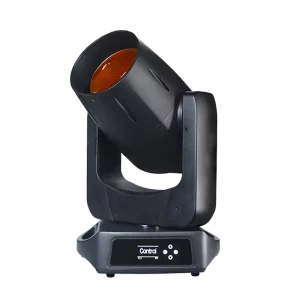
Imager B200—LED Beam Moving Head: Its 200W LED source and 1.9° beam angle produce narrow, concentrated aerial beams. Eight rotating gobos plus an open position, an eight-color effect wheel, and dual prisms provide additional options for outdoor shows, theme parks, and architectural lighting.
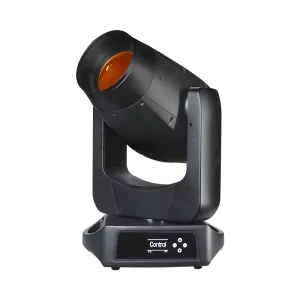
Imager H280—LED Beam, Spot, and Wash Moving Head: A 280W LED source, 3°–33° zoom, CMY color mixing, 13 fixed gobos, and nine rotating gobos allow one fixture to create multiple effects. We recommend this model when a project requires greater design flexibility with fewer fixture types.
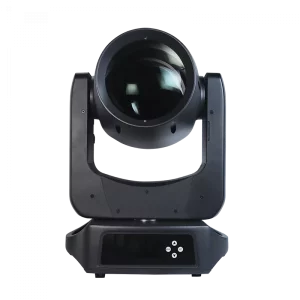
Imager B100—Its 100W laser source and 0.8° ultra-narrow beam angle produce concentrated, clearly defined beam effects. Twenty-three fixed gobos, ten rotating gobos, and multiple prisms provide additional options for outdoor projects that require prominent long-distance beams.
All three fixtures are rated IP66, making them suitable options for long-term outdoor installations. Dasen Lighting combines lighting design, product development and manufacturing, control programming, installation, commissioning, and ongoing maintenance to support projects from fixture selection through long-term operation.
Choose Well and Maintain for Reliable Outdoor Performance
Reliable outdoor lighting starts with an IP66 fixture suited to the project and continues with scheduled care of its optics, cooling system, seals, connectors, and pan/tilt components. Dasen Lighting offers LED beam, hybrid, and laser moving heads for different design goals. Share your installation environment and required effects with our team to receive a suitable product and maintenance recommendation.
References
- https://www.topledlighting.com/news/ip-rated-outdoor-moving-head-lights-buyers-guide/
- https://www.commercial-lighting.net/the-long-term-roi-of-preven
- https://www.djclublight.com/how-to-select-the-best-waterproof-moving-head-lights-for-theme-parks/tive-vs-reactive-lighting-maintenance/
- https://www.djclublight.com/step-by-step-maintenance-guide-for-moving-head-lights/