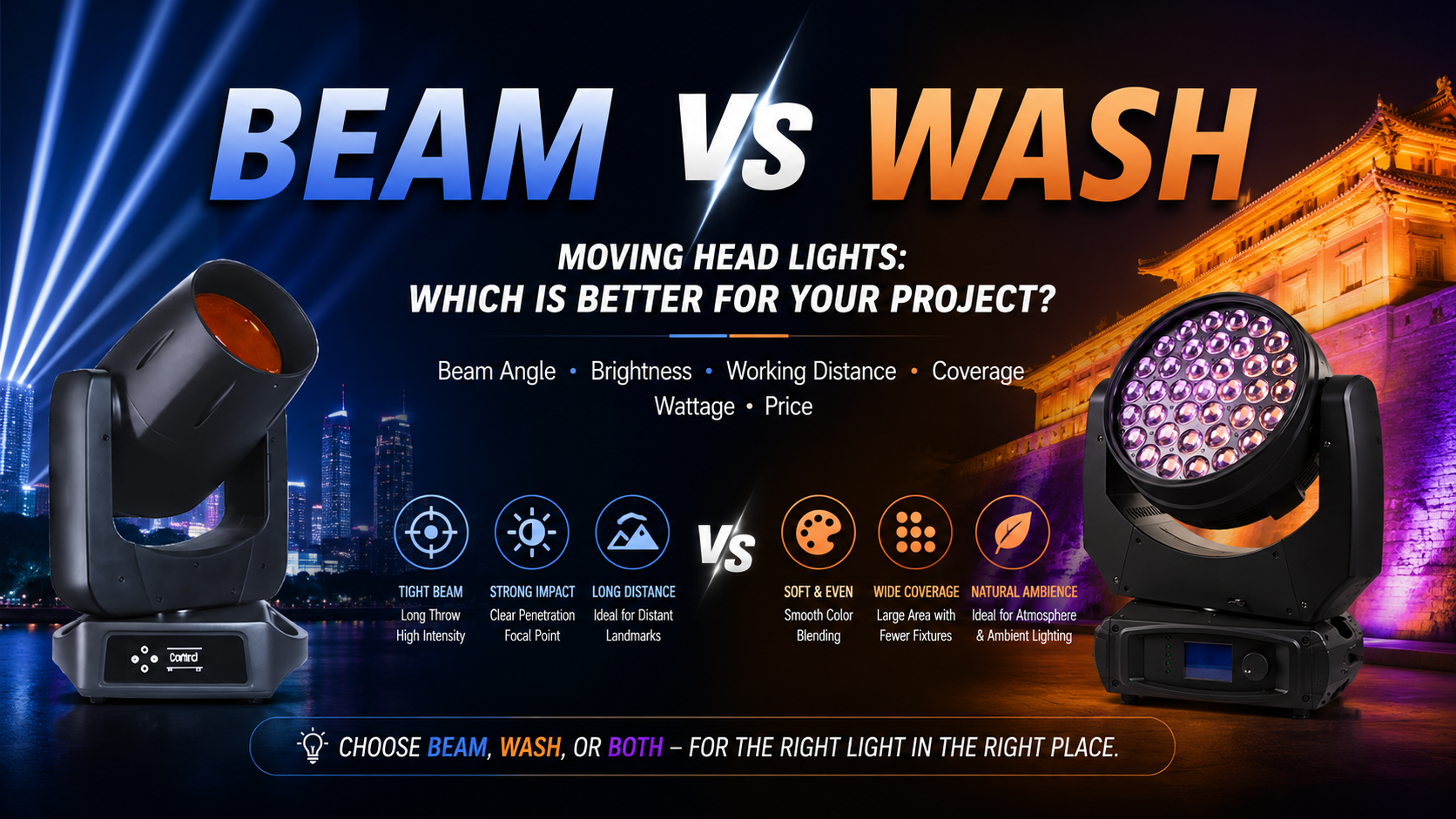
Beam and Wash moving head lights may look similar, but they are designed for very different lighting tasks. Choosing the wrong type can affect coverage, visual impact, fixture quantity, and overall project cost. This guide compares their beam angle, brightness, working distance, coverage, wattage, and price, while explaining when to use Beam, Wash, or both in cultural and tourism lighting projects.
What Is a Beam Moving Head Light?
A Beam moving head light produces a tight, high-intensity column of light with minimal diffusion. This is the core definition, and every function, advantage, and limitation below follows directly from it.
Advantages
- Strong visual impact, making it an effective focal point in any lighting design
- Long-throw aerial effects that hold up well across large or open sites
- Clear penetration through haze, fog, or open night air, which keeps the beam visible under difficult conditions
Limitations
- Not suited for even area coverage, leaving gaps between individual points of light
- Not suited for color washing, since it cannot produce a smooth, continuous field of color
- Requires more fixtures to fill a large area, which adds to installation and control complexity
What Is a Wash Moving Head Light?
A Wash moving head light produces soft, diffused light designed for large-area color coverage. Its optical design moves in the opposite direction from a Beam fixture: instead of concentrating light into a single column, it spreads and softens the output across a wide angle.
Advantages
- Smooth color blending, with no visible hard edges or hot spots
- Reliable large-area coverage, achieved with fewer fixtures than a more concentrated light source would need
- A natural, non-intrusive quality that works well for ambient and atmospheric lighting
Limitations
- Lacks a sharp beam effect, so it cannot serve as a focal point on its own
- Lacks long-distance impact, since diffused light loses definition more quickly over distance
- Less effective as a standalone accent for landmarks or dramatic highlights
Further reading: What Are Moving Head Lights: Types, Structure & Uses
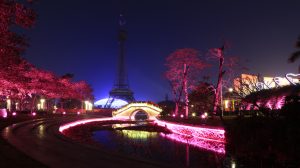
Beam vs. Wash Moving Head Lights: Key Differences
Once the basic definitions are clear, the real question becomes practical: which specifications actually matter when comparing the two on a project? Six criteria come up again and again:
- Beam Angle and Light Spread: This is the root cause of every other difference on this list, since coverage, intensity, and working distance all follow from how tight or wide the beam is.
- Coverage Area:This determines how many fixtures a project actually needs, which directly shapes total cost.
- Light Intensity:This determines how visible the effect is at distance, especially outdoors or against ambient light.
- Typical Wattage:This shapes running cost and power infrastructure needs, particularly for sites with many fixtures.
- Effective Working Distance:This decides whether a fixture can reach its intended target at all in a given layout.
- Price Range:This depends on fixture count as much as unit price, so total project cost matters more than a per-unit comparison.
With these six criteria in mind, here is how Beam and Wash moving head lights compare side by side:
| Comparison Criteria | Beam Moving Head | Wash Moving Head |
| Beam Angle and Light Spread | Narrow and concentrated | Wide and diffused |
| Coverage Area | Small per fixture, focused on a single point or path | Large per fixture, suited to even area coverage |
| Light Intensity | Highly concentrated, strong penetration | Spread out, prioritizes smooth blending over intensity |
| Typical Wattage | Commonly 200W–380W LED | 100W–600W LED (depending on LED count and size) |
| Effective Working Distance | Long, suited to distant focal points | Shorter, suited to near and mid-range coverage |
| Price Range | Roughly $100–$350 for compact entry-level models, rising to $1,600–$2,500 for professional outdoor-rated units | Roughly $100–$600 for compact entry-level models, rising to $1,400–$2,200 for professional zoom-equipped units |
Key Project Insights for Beam vs. Wash Moving Head Lights
The comparison above covers the raw specifications, but a few patterns only become clear once those specifications are applied to an actual project. The three insights below are the ones that most often affect budget and layout decisions.
A Narrower Beam Angle Doesn’t Always Mean Lower Total Cost
A narrower beam angle does not automatically reduce total project cost. A tighter beam, typically in the 1.5° to 5° range, concentrates light into a smaller footprint, so more Beam moving head lights are needed to cover the same area without gaps.
For example, a layout using narrow beams might require six to eight Beam moving head lights to cover an area that four to five wider-angle Wash moving head lights could cover instead. This higher fixture count adds installation labor and long-term energy consumption, which can offset any savings from a lower per-unit price. Total cost should therefore be calculated across the full fixture count for a site, not from the price of a single unit.
Working Distance Advantage Comes at the Cost of Coverage Uniformity
A long working distance and even coverage cannot both be maximized by the same fixture, since the two depend on opposite beam characteristics. A narrow beam allows light to travel a long distance without losing intensity, which is why Beam moving head lights are used when mounting height exceeds roughly 25 feet or when the light needs to stay visible as an aerial effect in haze.
The same narrow beam that enables this distance also reduces uniformity: in mounting-height comparisons, narrow beams produced a lower uniformity ratio than wider beams and created more pronounced bright spots. Wash moving head lights avoid this by using a wider angle, but at the cost of the long-distance visibility a Beam moving head light provides. The choice should therefore come down to which requirement, distance or uniformity, matters more at each point in the design.
Fixture Count Scales Differently with Site Size for Each Type
Fixture count does not scale at the same rate for Beam and Wash moving head lights as site size increases. This comes down to the Spacing Criterion, the maximum distance allowed between fixtures while maintaining even illumination. Wash moving head lights have a higher Spacing Criterion, often 1.2 to 1.5, allowing wider spacing while still maintaining coverage, while Beam moving head lights have a lower Spacing Criterion and require closer placement to avoid visible gaps.
As a result, the number of Beam moving head lights needed grows faster than the number of Wash moving head lights as project area increases. Project budgets should scale Wash fixture count with area, and reserve Beam fixture count for the number of focal points rather than the total area.
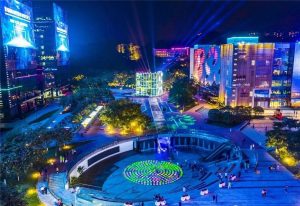
Beam vs. Wash Moving Head Lights for Cultural and Tourism Projects
Beam and Wash moving head lights each fit specific roles within cultural and tourism lighting projects. The sections below outline when to choose one, the other, or both.
When to Choose a Beam Moving Head Light
- Night tour routes and scenic light shows for long-distance visual impact
- Landmark and building facade lighting for dramatic accents
- Themed light festivals and immersive night attractions
When to Choose a Wash Moving Head Light
- Historic sites and heritage buildings for even, non-intrusive color coverage
- Garden and park pathway lighting for ambient atmosphere
- Cultural performance stages and outdoor theaters for uniform backdrop lighting
When to Combine Beam and Wash Moving Head Lights
- Large scenic parks, where Beam marks landmarks or entry points and Wash lights surrounding pathways and greenery
- Night tour routes, where Beam highlights key photo stops and Wash keeps walking paths evenly and safely lit
- Light festivals, where Beam drives dynamic show elements,and Wash fills in the base color layer across the site
Recommended Beam and Wash Moving Head Lights from Dasen Lighting
For projects that need both fixture types from a single, reliable source, Dasen Lighting offers two models built for exactly these roles: the ImagerB 200 for Beam applications, and the XY-037 for Wash applications.
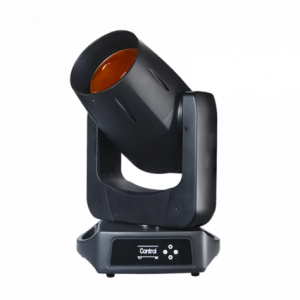
ImagerB 200 — LED Beam Moving Head
- A tight 1.9°beam angle paired with 11,250 lux at 20 meters delivers long-throw visual impact for landmarks and night shows
- Its patented eight-color wheel and 8-facet-plus-4-linear prism system produce layered, dynamic aerial effects
- The housing carries an IP66 rating and operates across -20°C to 45°C, holding up under dust, moisture, and temperature extremes
- Control runs on Art-Net, sACN, RDM, and DMX, so the fixture integrates into larger lighting networks
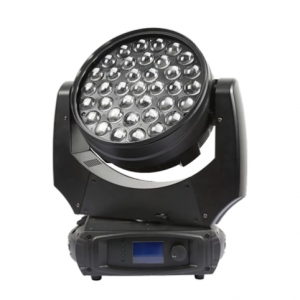
XY-037 — LED Wash Moving Head
- The fixture pairs 37×10W 4-in-1 RGBW LEDs with an electrical zoom from 5° to 55°, adjusting from a focused beam to a broad, even wash
- At 13.8 kg with responsive pan/tilt movement, it rigs easily and keeps pace with fast-paced programming
- An onboard LCD display handles Auto Running, Built-in Programs, and Master/Slave modes for straightforward on-site operation
- DMX512 control offers multiple channel modes (9/12/29CH), giving flexible setup across different consoles
Paired together, the ImagerB 200 and XY-037 cover both ends of a project’s lighting needs.
Bringing Beam and Wash Together
Beam lights deliver piercing long-distance accents; Wash lights provide smooth, even coverage. Choosing the right type—or combining both—optimizes impact, fixture count, and budget. For reliable, IP-rated solutions, Dasen Lighting’s ImagerB 200 (Beam) and XY-037 (Wash) cover all needs.
Contact Dasen Lighting today for tailored project advice and quotes.
Beam vs. Wash Moving Head Lights FAQ
Q1: Are Beam or Wash fixtures better suited for outdoor, all-weather installation?
Both Beam and Wash moving head lights can be designed for outdoor use. The key factors are the fixture’s IP rating, installation location, exposure to rain and dust, and intended operating duration. For permanent or frequently exposed outdoor installations, reliable weatherproofing, typically IP65 or above, should be prioritized regardless of fixture type.
Q2: Is it better to use a Hybrid (Beam+Wash) fixture instead of buying both separately?
For sites needing both effects in the same zones, a Hybrid fixture can reduce fixture count and simplify installation, though dedicated Beam and Wash units generally offer stronger individual performance for large-scale or long-term installations.
Q3: Can Beam and Wash fixtures be controlled on the same DMX console/setup?
Yes — as long as both fixtures support DMX512, they can run on the same console and even the same universe, since DMX addressing works per fixture regardless of type. The main thing to plan for is channel count: Beam and Wash fixtures often have different DMX channel profiles (e.g., extra channels for zoom, iris, or additional color mixing), so addresses need to be assigned carefully to avoid overlap when mixing fixture types in one setup.
References
- https://hi-hyperlite.com/blogs/comprehensive-guides/ufo-high-bay-optics-wide-narrow-beam-angles
- https://www.paclights.com/learning-center/flush-mount-downlight-beam-angles-explained-for-better-coverage/